Products, companies, music and ideas. Not all of it worked. All of it left something behind.
1997
Lift Off!
The track of the Euro-Mir at Europa-Park
The problem
I have been making music since 1993, first on a single keyboard, later at night in a proper studio. Back then it was a battle of equipment. Without the machines you had no chance of building anything anyone wanted to hear.
The owner of the studio produced a lot for Europa-Park. One day he came in and said, you are always sitting in here for free, now I need you.
The idea
There was none. We had little time and no desire at all. We made a short riff with a bit of boom boom underneath. That was it.
What came of it
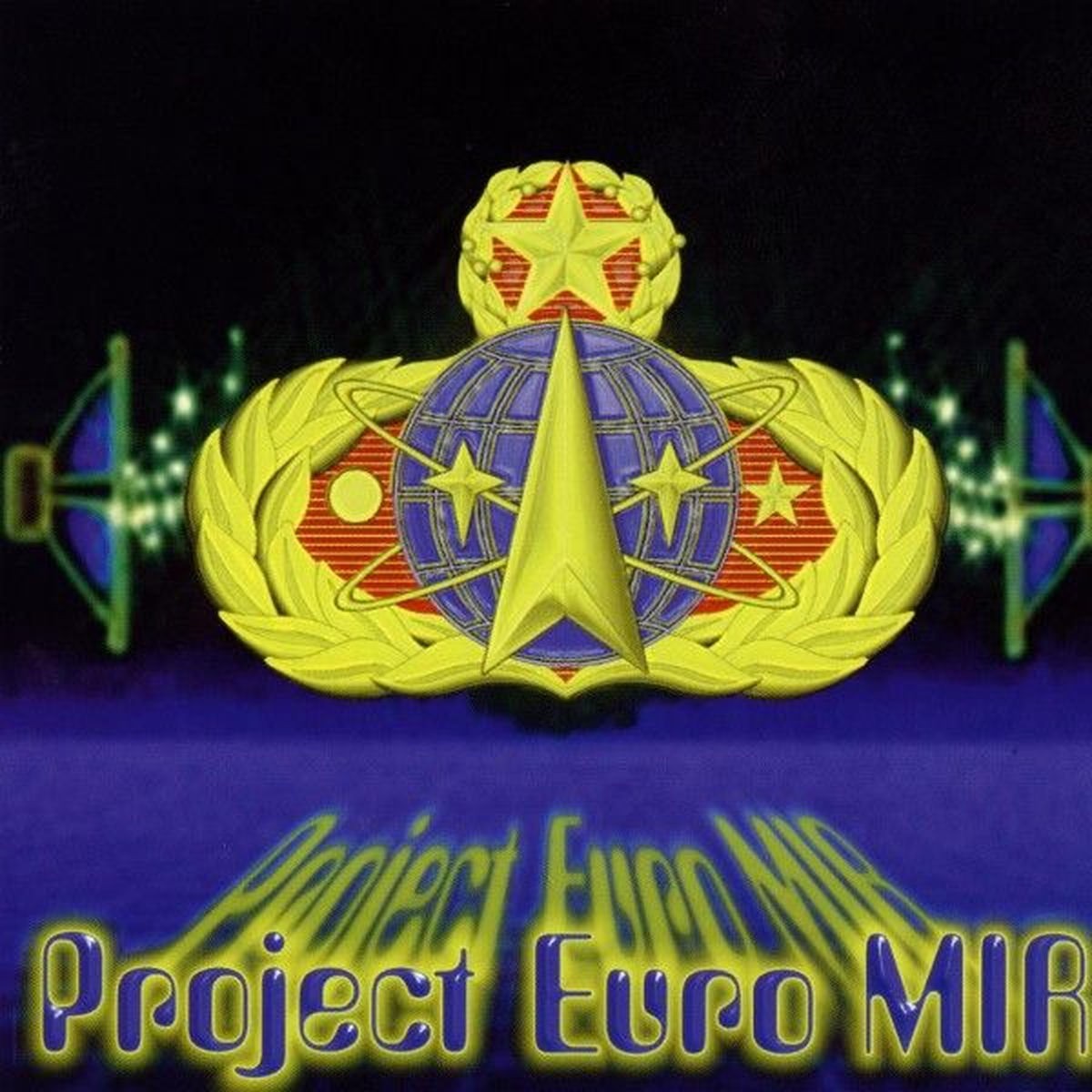
The riff turned into a whole record. From 1997 Lift Off! carries the Euro-Mir rollercoaster at Europa-Park, and seven of the ten tracks on the soundtrack album are by me and Ben Klug.
We released under pseudonyms. Mine is Hell Bopp, after the comet Hale-Bopp, visible to the naked eye in 1997. A play on words from spaceflight, fitting the theme of the ride.
From those same years come four tracks on Café del Mar: Vol. 8, Vol. 11, the Ibiza edition Volumen Siete Y Ocho and The Very Best Of. All together that is 23 records of my own and tracks on more than 150 further releases.
When I am at the park today I sometimes stand in the ride and see people in the queue moving to it. On 9 January 2027 the park retires the Euro-Mir after thirty seasons. The melody stays, the park has confirmed that.
What I learned
You never know while building what will last. The job I wanted least is the only thing from that time that has held for thirty years.
The soundtrack album, Calren Records 1997. Artwork by comprende, design by lasse.
In 2006 Google bought YouTube. Video on the internet was settled. Live was not. Anyone who wanted to show something live needed a broadcaster, a licence and money.
But here is the honest part. I did not start with the problem. I started with the technology. It took me years to see that.
I was employed at Haufe at the time and going nowhere. I was screwing myself deeper and deeper into something negative, like a corkscrew, not into something positive.
Then someone came to me with an idea. In 2008 I founded Zaplive Media GmbH.
The idea
Everyone should be able to run their own live channel. No broadcaster, no licence, a camera is enough. Three years before Twitch existed.
What came of it
Technically it worked. We broadcast live from the bush in South Africa. Someone crossed an ocean and transmitted along the way. Sound was a huge problem, the devices were playful and far too much in love with the technology.
The real problem was a different one. We needed people who broadcast and people who watch, and neither group comes without the other.
The answer was in the house the whole time. A few people were streaming their computer games. That is the simplest case there is, sound and picture are already there, you only have to pass them on. I did not recognise that this was the easiest thing to transmit and had a huge base of people watching.
Justin.tv recognised it. It became Twitch.
In the end MyVideo was interested, the video portal of ProSiebenSat.1. They wanted to buy parts out. It did not happen, we could not get it big enough. In 2010 we ended it. No insolvency, no sale. We stopped.
What I learned
It is great that it works, but if nobody needs it, it is of no use.
Being too early is a particular form of failure. It teaches timing.
And it teaches something else. We had the right observation in our own house and did not see it, because we were looking at the technology and not at the people using it.
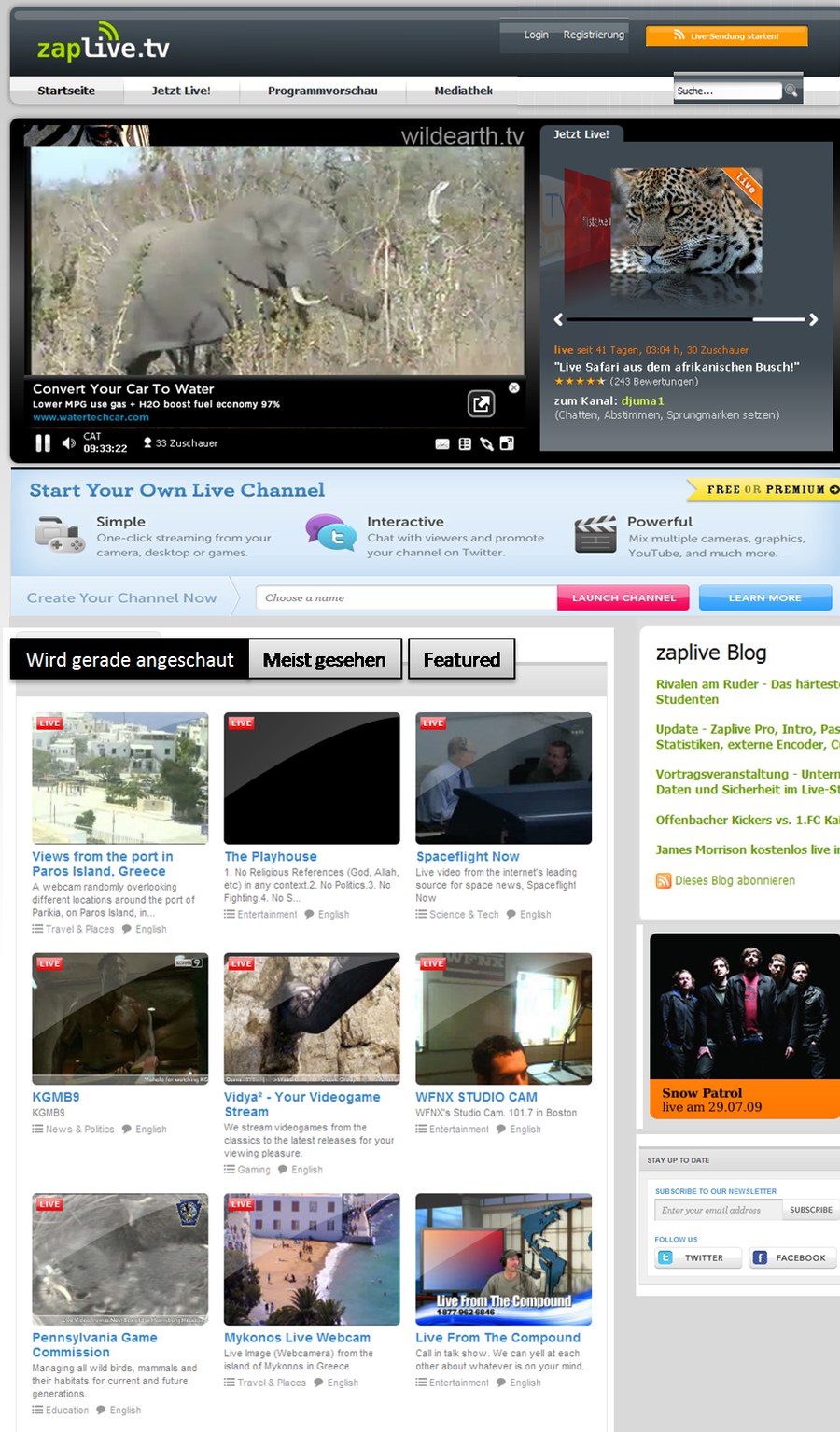
The zaplive.tv home page, 2009. At the top a live safari from the African bush, running for 41 days with 30 viewers. In the second row at the bottom, the channel that streams video games. From his own archive.
I returned to Haufe Group in 2010. The company had already tried a lot to bring new things into the organisation. It did not work. New business rarely grows where the existing business is being defended.
The idea
The CEO at the time gave me a carte blanche. He did not call it that, but that is what it was. I did not have to take anyone on, I had my own budget, and I was allowed to deliberately sit outside the house.
I named the unit Blue Ocean, after the book that divides the market into a red and a blue ocean. The red one is where everyone fights over the same customers. The name was meant to open the pictures in people’s heads immediately, and that is exactly what happened. Whoever moved across was suddenly Blue Ocean.
What came of it
We built our own approach in three waves. Scout means understanding what someone really needs. Proof means testing whether it holds up technically and commercially. Deliver means building it. Alongside that, design thinking, the ME310 programme at Stanford together with the University of St. Gallen, and teams that choose their own path.
Until 2019 I led more than 150 people as head of innovation and new products. Several businesses came out of the unit. One of them is Lexware Office.
What I learned
A separate unit helps. I would do that the same way again today.
The danger comes afterwards, and we walked straight into it. One group gets to try everything, the other feels like it is shovelling coal. Yet the two depend on each other. Without the business that makes a profit today there is nothing to invest.
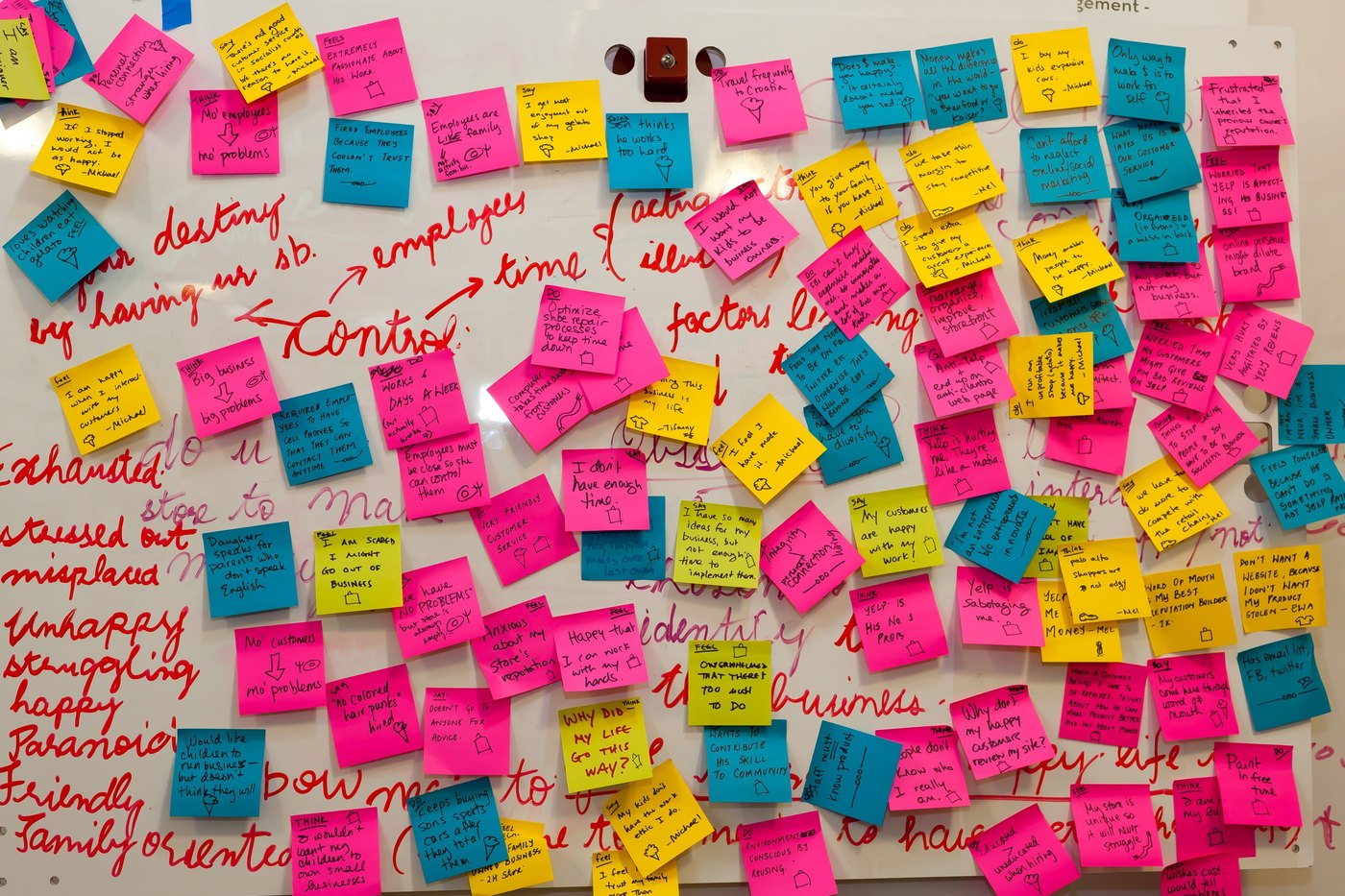
The wall at Stanford, 25 October 2010. Hundreds of notes from conversations with small businesses, and in red the words that kept coming back: exhausted, stressed out, unhappy, struggling, paranoid, family oriented. That is what the scout phase means.
Started as Greenland, with me as employee number zero
The problem
Self-employed people spend their evenings on receipts, invoices and questions that have nothing to do with their profession. Bookkeeping is the heart of every business. It is underrated.
The idea
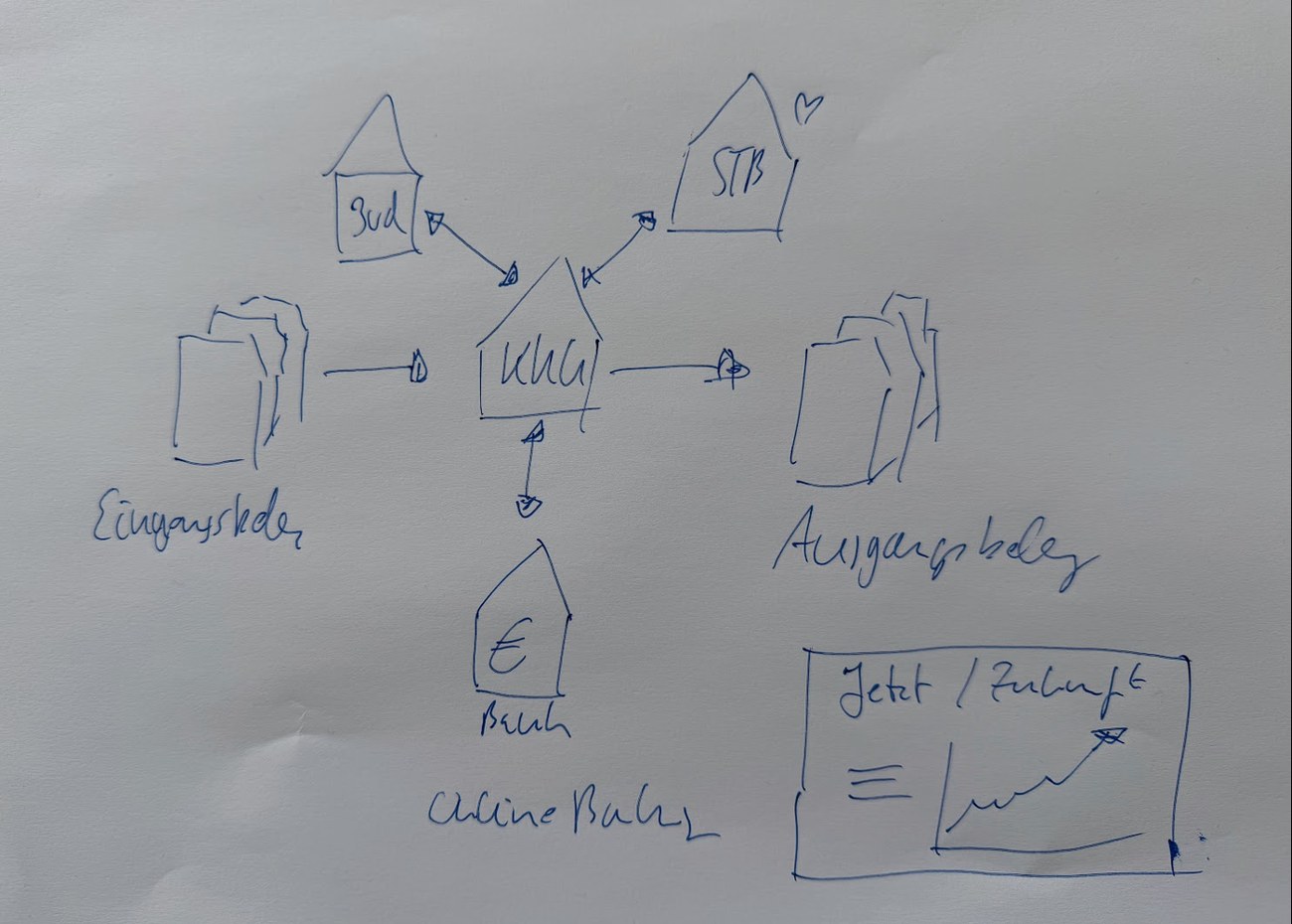
I sketched it on a sheet of paper in the canteen in 2010. Back then everyone said: accounting from the cloud? Nobody wants that.
I started anyway, at the end of 2010. Internally the whole thing was called Greenland. I was employee number zero. I deliberately say zero, because one would sound as if I were counting myself in.
What came of it
The first phase took almost nine months. We talked to nearly 800 entrepreneurs and asked nothing but what they needed.
We decided against bookkeeping as the cut and for the whole business process, from beginning to end, with tax advisers and banks built in from the start.
In 2012 it went to market and won 5,000 customers in the first year. Today more than 650,000 companies work with the Lexware solutions.
What I learned
Shortly after the launch we asked customers for the first time how likely they were to recommend us. The answers turn into a number between minus one hundred and one hundred.
It came back at 16. I had been so convinced, we had built exactly what people told us. It really knocked me off balance. It took me a week to deal with it. Today the number is above 55.
Building what customers say is not the same as understanding what they need.
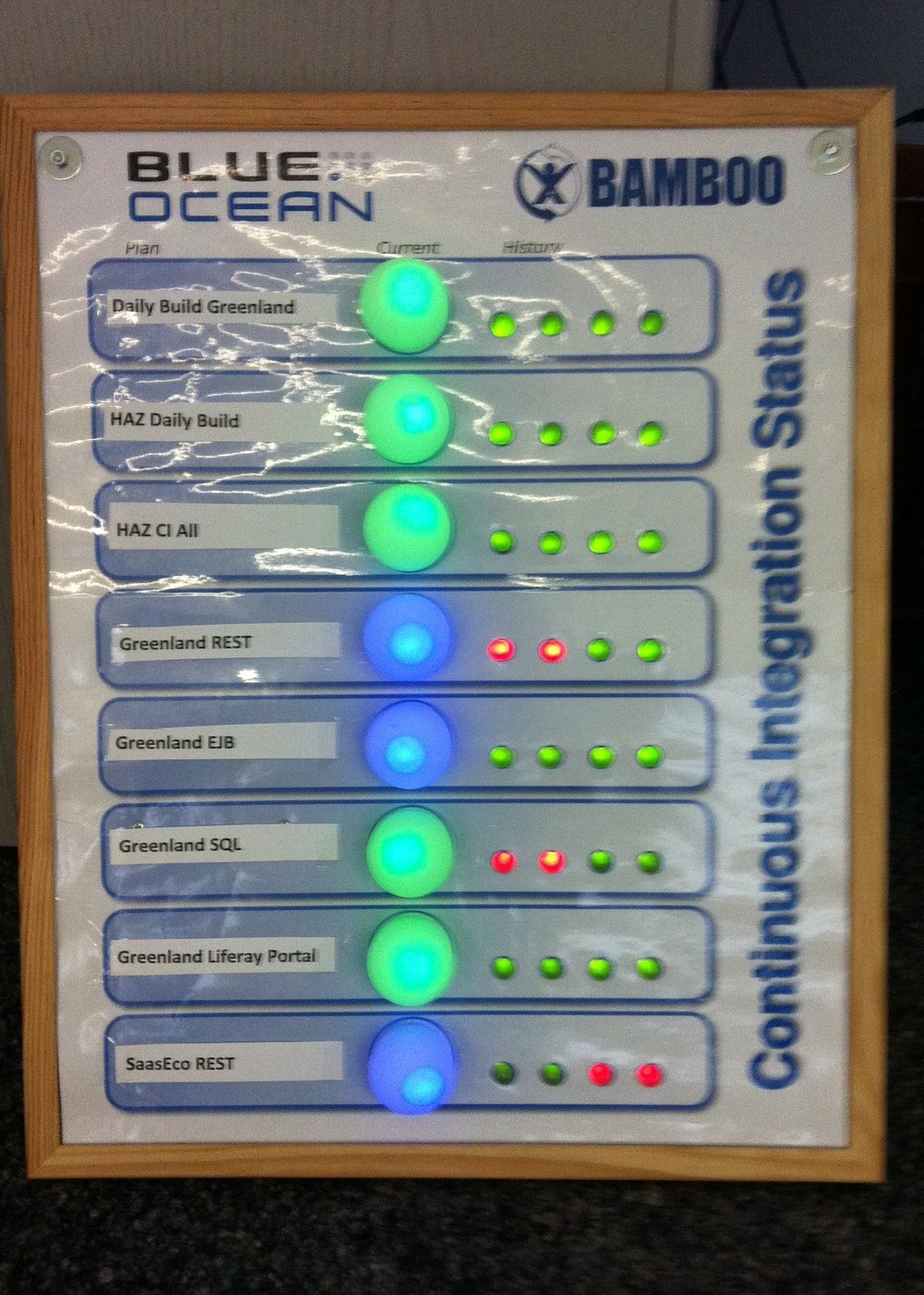
The canteen sketch, 2010. The small business in the middle, incoming receipts on the left, outgoing ones on the right, the bank below, bookkeeping and the tax adviser above. In the bottom right corner the question that still carries everything: now and the future.The status board in the office, 14 November 2011, a year before launch. At the top the Blue Ocean mark, below it the builds: Daily Build Greenland, Greenland REST, Greenland SQL. Green means it runs.
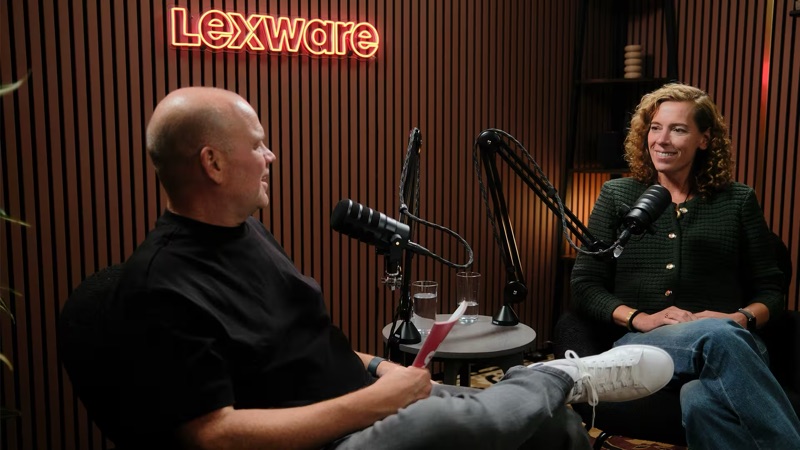
People talk a lot about the self-employed and rarely with them. The attention goes to startups. Yet around 97 per cent of all German companies have fewer than fifty employees.
The idea
Give them a stage they speak on themselves. We are not the main character, the people we work for are.
What came of it
Written portraits and a podcast I host. Guests who tell how they started, what went wrong and what they do differently today.
What I learned
We call ourselves people who keep your back free. That applies here too. The story belongs to whoever lived it, not to whoever built the stage.
AI makes software easier to copy. Features, code and channels will soon look the same everywhere. Simply building faster wins nothing.
The idea
Do not prompt AI, mandate it. A mandate describes a goal, a boundary and a responsibility, not a single task. Out of that comes an AI co-CEO for the self-employed that keeps their back free instead of working through a to-do list.
What came of it
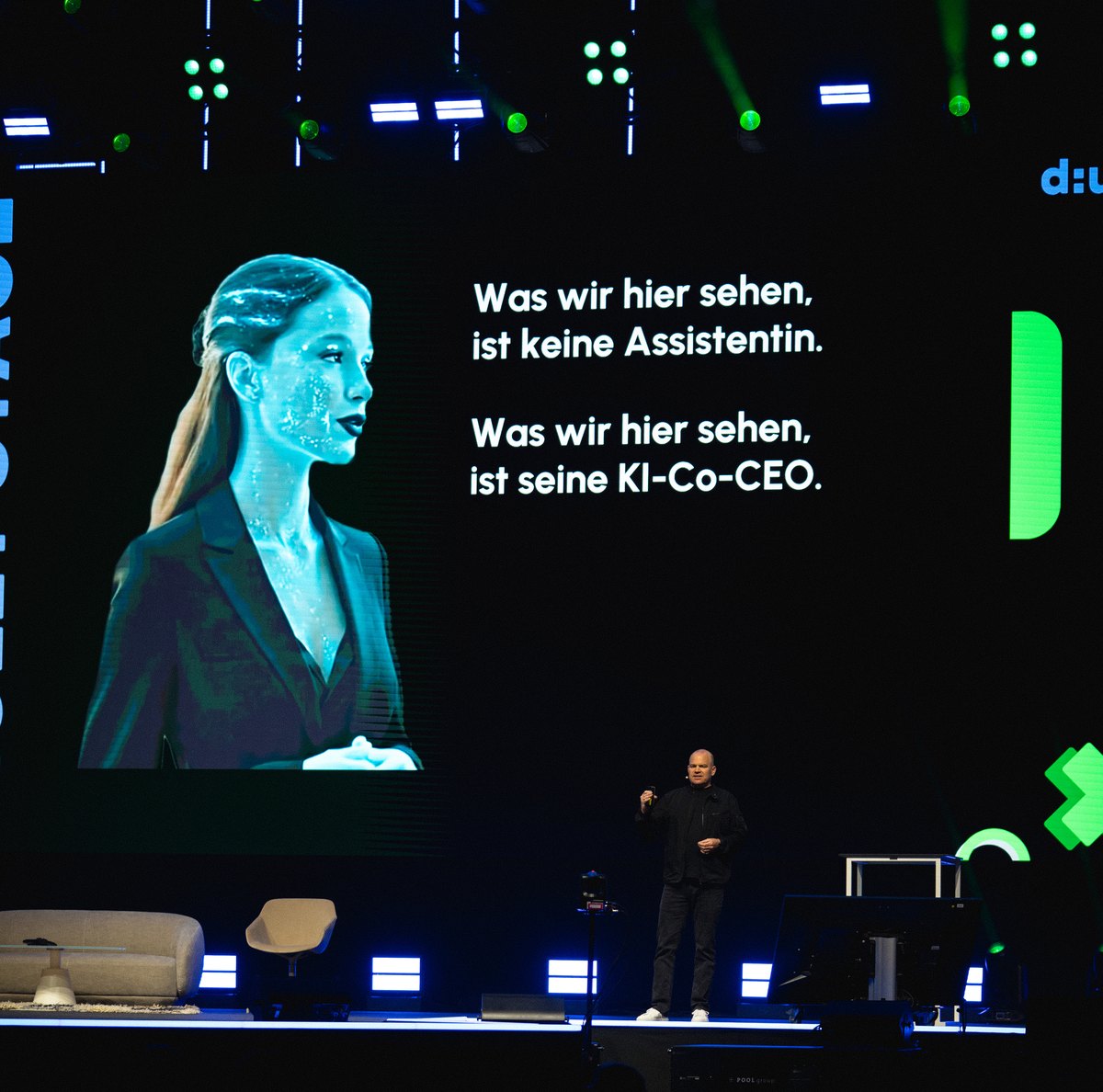
In 2025 it was on stage for the first time, in October at the Business Creator Summit and at Black Forest Space. In December DIE ZEIT picked it up.
In 2026 it was published in full and freely available at das-lena-prinzip.de. Handelsblatt and Badische Zeitung picked it up.
What I learned
This is the part that is not finished. What I believe today: whatever can be copied will be copied. What stays is what someone stands for.
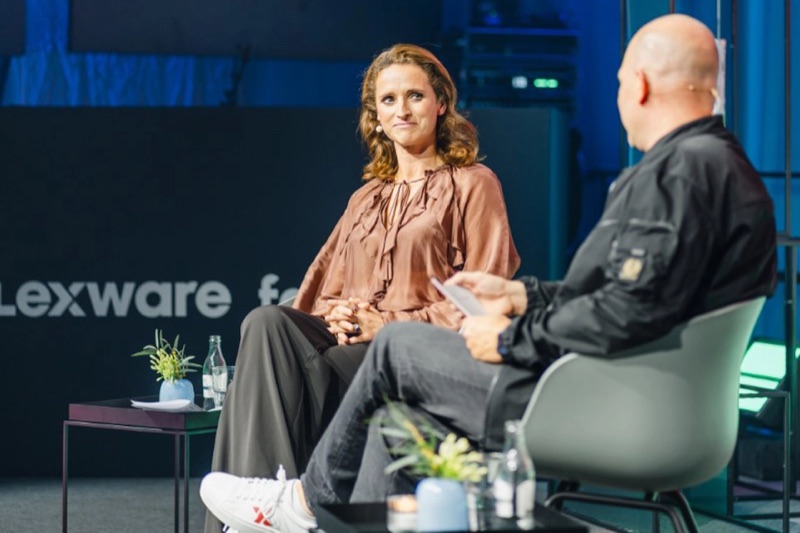
On stage at data:unplugged, March 2026. The screen carries the sentence the whole idea turns on: what we see here is not an assistant, it is his AI co-CEO.